
Workshop
VSP in Hard Rock: A Decision-Grade Tool
Practical Imaging: What Works, What Fails, and Why
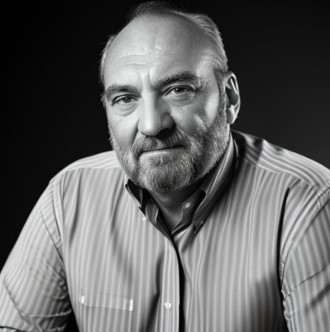
Dr. Calin Cosma| Owner of Vibrometric
Stands as a globally renowned seismic expert with over four decades of pioneering multi-disciplinary geoscience research, educational leadership, and the development of advanced seismic characterization tools and techniques. His career encompasses significant contributions to R&D initiatives, crafting innovative instruments, imaging methods, and surveying techniques that span the full spectrum of seismic applications, including acquisition, processing, and interpretation in diverse environments. Dr. Cosma’s notable achievements include constructing the first system for cross-hole seismic imaging in hard-rock (early 80’s), developing the comprehensive VIBSIST seismic source range (late 90’s), and pioneering the Image Point Transform (mid 80’s) and 3D VSP Image Point Migration (early 00’s) techniques, each marking significant milestones in the hard-rock seismic deep sensing field.

About this event
Vertical Seismic Profiling (VSP) is increasingly recognized as one of the most direct tools for hard-rock rock characterization supporting mineral exploration, mine planning, development, and operational safety decisions. This one-day workshop focuses on practical cases and workflows used in industry today, highlighting what works in practice, common failure modes, and the key decisions that determine success.
Target Audience
Geophysicists, academics, mining engineers, data processors, project managers
DATE
4 October 2026
PARTICIPANTS
Unlimited
FEE
Delegate: R500
Student: Free
DURATION
Time: 9am to 4pm
What I Will Learn?
Attendees will gain a clear understanding of the full VSP workflow, including:
- How VSP complements surface seismic and when it’s the right choice
- Survey objective settings and selection of survey types (zero-offset, walkaway, multi-offset/multi-azimuth)
- Equipment selection and downhole coupling methods (sources, sensors, recording)
- Acquisition design principles (frequency/energy, time-depth sampling, coverage vs reflector geometry)
- Processing and imaging techniques : Conditioning, wavefield separation, multi-channel filtering (F-K frequency-wavenumber, Radon, Image Point), handling tube waves, anisotropy/polarization, CDP mapping.
- 3D VSP migration with interpretation of reflector dip /strike.
Case Examples Covered
Practical case examples span:
- Hard-rock characterization for exploration
- Mine engineering and geotechnical applications
- Broader subsurface uses such as carbon storage (CCS)
What Should I Bring
- Nothing needed
Special Focus: DAS & Advanced Methods
The workshop also addresses how Distributed Acoustic Sensing (DAS) is reshaping downhole acquisition options. To align with the novel imaging and inversion methods emphasis at Seismix 2026, a compact, non-marketing overview will be provided on where advanced VSP imaging and inversion workflows (e.g., wave-equation methods) are headed — and when they are worth the extra cost and effort in an industry context.
Prerequisites Required
General knowledge of seismic principles is recommended but not strictly required.
